Petro Picks Slanderer For Ohio Gov Race

Well if anyone doesn’t think Ohio Attorney General Jim Petro isn’t pandering to political and religious conservatives by now, his new choice of a running mate should set any doubt aside.

Petro picked State Senator Joy Padgett (R-Coshocton) to be his Lt. Governor should he be elected.

Padgett, who supported the ban on gay marriage, became infamous during her 2004 State Senate campaign when she smeared her opponent and won 54 to 46 percent in a district that leans Republican.

Her opponent?

Former journalist Terry Anderson, who had been held as a hostage in Lebanon by the Hezbollah terrorist group for more than six years from 1985 to 1991.

Padgett’s campaign used a photo of Anderson meeting one of his former kidnappers when he went back to Lebanon with CNN to look for his captors.

The attack ads against Anderson have been in mailings and on TV and radio. At a League for Women Voters debate last week, Anderson walked off the stage, refusing to participate. “The first time I met Padgett she said, ‘I run a clean campaign,’ and I said, ‘Good, let’s do that.’ I have attacked her votes . . . never attacked her personally. . . . She attacked me, twisting my campaigns. The last piece, I couldn’t accept it.

“The picture,” he continued, referring to the photo of himself shaking hands with the Hezbollah official, “is one of the guys who kidnapped me, who held me for seven years, who chained me and blindfolded me. I went back to Lebanon with a CNN news crew and looked him up and put him on camera and asked him, Why did you do this?

“She now says I am an apologist for terrorists.That’s sheer nonsense. It’s offensive. I’ve just about had enough.”

GOP Target: Terry Anderson and also
Joy Padgett is scum

I wasn’t planning on voting for Petro, especially after his God and Bible advert he broadcast shortly after his campaign started, but now his judgement is in question by adding Padgett to the ticket.

*Side Note* Maybe it is too early after the announcement but none of the reports I read mentioned Padgett’s attack on Anderson in 2004 in their stories.

A Bit of Local News

Finally some local news:

Coach Hite resigns

The big news is that FHS Head Football coach Cliff Hite stepped down as coach on 12/1/2005. He became the winningest coach in school history, chalking up a 68-40 record in 10 seasons. Since 1998 his teams have six out seven league titles and appeared in the state playoffs in 1999, 2002, and this season.

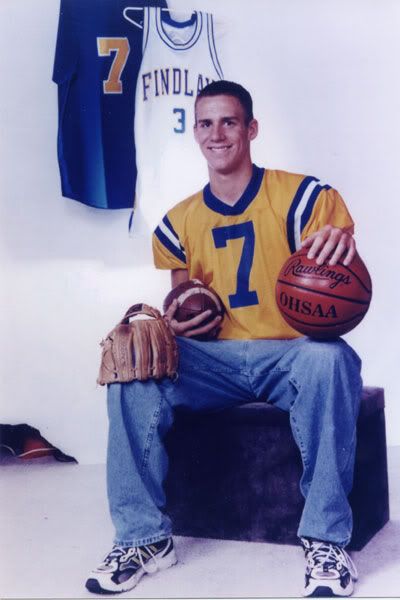
His scheme was a version of the run and gun spread offense that allowed quarterbacks to put up some impressive yardage and touchdown stats. His most famous student is current Pittsburgh Steelers starting QB Ben Roethlisberger.

A replacement probably won’t be named until the spring when coaching changes are usually decided, but the local paper, The Courier, speculated that current offensive coordinator Mark Ritzler might be in line for the job.

Being a classmate of Ritz back in 1980’s at FHS, I hope he gets the job if he wants it.

Hite steps down as Trojans coach

David Cryer to play Broadway

Actor David Cryer, Findlay High ’54, who has been with the touring company of the musical “Phantom of the Opera” for the past 13 years, will be playing “Monsieur Firmin” in the Broadway production starting in January.

The touring company is performing in Cincinnati through January 1st.

Cryer is the father of actor Jon Cryer who stars on the show “Two and Half Men” on CBS.

Phantom’s foe: 10 questions with actor David Cryer

Originally posted on the blog “Hancock County Politics Unfiltered”

King George spies on loyal subjects just in case….

That loud thud you heard Saturday was the other shoe falling in Washington when President Bush went on live television and admitted he had the National Security Agency spy on US citizens. He hid behind the cloak of the 9/11 attacks to justify his actions in issuing the order.

“The authorization I gave the National Security Agency after September the 11th helped address that problem in a way that is fully consistent with my constitutional responsibilities and authorities. The activities I have authorized make it more likely that killers like these 9/11 hijackers will be identified and located in time. And the activities conducted under this authorization have helped detect and prevent possible terrorist attacks in the United States and abroad.”

The Bush administration also said that not only did Congress allow the President to issue such an order in the blank check resolution they gave him in October 2001, but that Congressional leaders, GOP and Democrats, had been briefed on the spying on several occasions.

The NY Times wrote this on Sunday:

“The disclosure of the security agency’s warrantless eavesdropping on calls between the United States and Afghanistan sheds light on the origins of the agency’s larger surveillance activities, which officials say have included monitoring the communications of as many as 500 Americans and other people inside the United States without search warrants at any one time. Several current and former officials have said that they believe the security agency operation began virtually on the fly in the days after the Sept. 11 attacks.”

Eavesdropping Effort Began Soon After Sept. 11 Attacks

As any fisherman will tell you, when one tosses out a net sometimes you get other things beside fish. That is the Bush operation in a nutshell. It assumes we are guilty till proved innocent and their fishing operations have had limited success. Fewer than a couple dozen people arrested in the US for suspected terrorism activities since 2001 have been terrorists.

In a Washington Post article in June 2005 found:

Among all the people charged as a result of terrorism probes in the three years after the Sept. 11, 2001, attacks, The Post found no demonstrated connection to terrorism or terrorist groups for 180 of them.

Just one in nine individuals on the list had an alleged connection to the al Qaeda terrorist network and only 14 people convicted of terrorism-related crimes — including Faris and convicted Sept. 11 plotter Zacarias Moussaoui — have clear links to the group. Many more cases involve Colombian drug cartels, supporters of the Palestinian cause, Rwandan war criminals or others with no apparent ties to al Qaeda or its leader, Osama bin Laden.

But a large number of people appear to have been swept into U.S. counterterrorism investigations by chance — through anonymous tips, suspicious circumstances or bad luck — and have remained classified as terrorism defendants years after being cleared of connections to extremist groups.

For example, the prosecution of 20 men, most of them Iraqis, in a Pennsylvania truck-licensing scam accounts for about 10 percent of individuals convicted — even though the entire group was publicly absolved of ties to terrorism in 2001.

U.S. Campaign Produces Few Convictions on Terrorism Charges

Bush’s actions may also conflict with the Foreign Intelligence Surveillance Act (1978) that requires court orders before spying on anyone can be started. That act was made law after the widespread surveillance done on protest groups and others in the 1970’s by the FBI and other law enforcement agencies and the abuse those agencies were found to have done.

A basic civil right is that search and seizure requires a warrant from a court. It is a check against an abuse of Federal power against people. President Bush seems to be abusing his authority.

Now I fully expect to see, later Sunday morning, the usual administration talking heads trying to spin Bush’s actions and try to turn it around and make it look like those for civil rights are in league with terrorists. Watch the morning shows and you will see it and hear it.

Then there is this bit from his “speech”:

“The activities I authorized are reviewed approximately every 45 days. Each review is based on a fresh intelligence assessment of terrorist threats to the continuity of our government and the threat of catastrophic damage to our homeland. During each assessment, previous activities under the authorization are reviewed. The review includes approval by our nation’s top legal officials, including the Attorney General and the Counsel to the President. I have reauthorized this program more than 30 times since the September the 11th attacks, and I intend to do so for as long as our nation faces a continuing threat from al Qaeda and related groups.”

President’s Radio Address (12/17/2005)

He is asking us to trust him and his appointed officials to operate in a correct manner. This is the same guy that just days ago admitted he tried to sell the war in Iraq based on bogus intelligent info, that we aren’t holding suspects in secret prisons in other countries where torture is not a big deal, and Iraq is getting better everyday. I find it hard to see President Bush and “trust” in the same room not alone in the same sentence.

According to the NY Times:

“In the early years of the operation, there were few, if any, controls placed on the activity by anyone outside the security agency, officials say. It was not until 2004, when several officials raised concerns about its legality, that the Justice Department conducted its first audit of the operation. Security agency officials had been given the power to select the people they would single out for eavesdropping inside the United States without getting approval for each case from the White House or the Justice Department, the officials said.”

And this is what happens, and we told you so, when Congress signed away their oversight on the “war” on terrorism in October 2001.

Congressional leaders, Democrat and Republican, have some serious explaining to do as to why they let the spying continue as long as did and it seems it still is. Their shock and indignation seem very hollow indeed.

Congressman Oxley announces retirement

The Toledo Blade reported moments ago that Rep. Mike Oxley (R-Findlay) would retire at the end of his term next year.

Mr. Oxley, 61, who has represented Ohio’s 4th Congressional District since 1981, cited House rules requiring him the relinquish his chairmanship of the powerful House Financial Services Committee at the end of this term as one of the factors in his decision. He must give up his chairmanship due to term limits.

“After a lot of thought and conversations with a lot of people…I’ve decided not to seek re-election next year,” Mr. Oxley told a crowd of about 200 people during a breakfast at the Findlay Country Club. “It was a tough decision.”

Congressman Oxley announces retirement

More later as events warrant plus I’ll add my 2 cents.

Election reform in Ohio gets heated

November 8th will see the attempt to reform the election process in Ohio. After the many corruption incidents with in State government and the problems with the elections in 2004 that drew unwanted attention from the rest of the country and the world, a group called Reform Ohio Now formed and got 4 issues on the ballot that address the major problems with Ohio’s current system.

Of course there is an opposition group called Ohio First that has just started airing adverts on TV as we come closer to the vote.

In the ad I saw I was struck on how vague it was and the use of buzzwords to create a negative feeling about the proposed issues. It talked about “special interest groups” being behind the issues. It said if the issues passed “voters would lose their voice” and the new process “wouldn’t be accountable” to the voter. The ad said that Ohioans would “lose their voice”.

Well I wanted to get some details and went to their site to read what they have to say. Here are their words with my comments:

Argument Against Issue 2

First, the adoption of this amendment is likely to lead to a significant increase in cases of fraudulent voting in Ohio, as experienced in other states that have adopted similar proposals. The proposed amendment does not contain a reliable method to protect the integrity of votes cast early, nor does it provide adequate safeguards to ensure that only eligible and qualified voters would be able to use these procedures.

Second, this amendment is not necessary because Ohio law already contains generous absentee voting provisions. Currently, any Ohio voter with a legitimate reason for being absent on Election Day can obtain an absentee ballot. In fact, there are 16 reasons that allow absentee voting under current Ohio law, including: military service; health and physical disability issues; work related issues; being age 62 or older; or, simply that the voter expects to be absent from the county on Election Day for personal reasons.

Third, the proposed amendment does not ensure that every Ohioan will have the same opportunity to vote early. The amendment does not establish a statewide standard that must be followed for designation of times and locations for early voting. The rules governing early voting could vary widely from county to county, because the amendment gives each county Board of Elections the discretion to designate the times and locations for early voting.

Because Ohio has absentee voting and provisional ballots (where people can vote on the day of an election if they had moved and not changed their registration before the normal registration deadline), there are laws on the books to qualify such ballots. The proposed amendment doesn’t change that. All the proposed amendment adds is that people can cast ballots at 35 days before the election WITHOUT having to give a reason. The amendment doesn’t prohibit the legislature from creating more laws to qualify such ballots. The actual text to the amendment starts “Any qualified elector entitled to vote in an election…” so it is assumed such ballots will be treated like absentee and provisional ballots are now (names checked in registration and votes counted 10 days after the election etc…).

Argument Against Issue 3

The proposed amendment would change how Ohio political campaigns are funded to benefit the wealthy and labor unions, to the disadvantage of all other Ohioans.

The proposed amendment allows labor unions to funnel unlimited amounts of money into the political process through a new type of political organization that is deceptively labeled a �small donor� action committee. In addition, there would be no obligation placed on labor unions to provide full disclosure regarding the source of this money, that could even be given by non-Ohio sources.

The proposed amendment would give an unfair advantage to wealthy candidates because they would be permitted to use unlimited amounts of personal money in their campaigns. However, unlike Ohio’s current law, the proposed amendment would not permit an individual running against a wealthy opponent to raise additional campaign dollars to make the election competitive.

The proposed amendment would also place drastic restrictions on the ability of all other Ohioans to raise money to combat the undue influence of the wealthy and labor unions in Ohio elections. These restrictions are designed to silence the voices of ordinary Ohioans in the elections process.

Actually there are limits to the amount of money a particular grouping can donate. The “small donor” action committee mentioned above are limited as are the most common contribution – the multi-state action committee and regular Political Action Committee (PAC). Contributions to the “small donor” section is $50 per person.

Here’s the a brief section from the actual text of the amendment:

Contributions to a Candidate for Member of the General Assembly
$500 from a political action committee (PAC) or a campaign committee
$1,000 from an individual or a multi-candidate political committee
$10,000 from a small donor action committee
$25,000 combined from all affiliated national, state, county, and local political parties

Contributions to a County or Local Political Party
$1,000 from an individual, PAC, or committee for all purposes;
$2,000 from a multi-candidate political committee for all purposes;
$5,000 from a small donor action committee for all purposes

Text of Proposed Amendments

Recently in Ohio, the limits were raised from $2,500 to $10,000. This means an individual can contribute up to $20,000 a year to a candidate. This floods the electoral system with excessive amounts of special-interest money, squeezing out and limiting the influence of the average Ohio citizen. Also major contributors get special consideration in getting state contracts. That is how Tom Noe got the state involved in his rare coin investments at the heart of a current scandal. There was also the scandal involving contracts given for the new schools program. Those contracts of course went to the largest contributors to the current administration. Amendment 3 would severely put a crimp in the usual “pay to play” system in use now.

Argument Against Issue 4

First, the amendment would remove from the control of Ohio voters the power to establish districts for the Ohio General Assembly and the U.S. Congress, by abolishing the role of elected public officials in these important tasks. The proposed amendment would place this power in the hands of a new commission that is made up of 5 political appointees. Two of the commission members would be selected by judges and the others may be chosen by lot. The members of the commission would not be required to meet any minimum level of qualifications. Once appointed, the commissioners would serve for an indefinite period of time, and would never be accountable to Ohio voters.

Second, the proposed amendment would grant the commission virtually unlimited power to spend Ohio tax dollars, with essentially no control by Ohio voters or other state leaders. No other state commission has this extraordinary spending power.

Third, the proposed amendment would remove the current protection in the Ohio constitution that prevents the dilution of your vote. The proposed amendment would also delete from the Ohio Constitution the provisions designed to prevent �gerrymandering,� and would permit the creation of legislative districts that break up communities and neighborhoods.

Finally, the proposed amendment would remove from the Ohio Constitution the authority of Ohio’s courts to review the commission’s activities. Therefore, unlike all other Ohio public officials, political subdivisions, boards, commissions, and agencies, Ohio citizens would have virtually no ability to challenge the actions of this elected commission in Ohio’s courts. The commission should not be uniquely unaccountable and placed above the law.

The members of the commission would have to be a qualified elector (a voter) of Ohio and cannot be an elected official. Two are appointed by two separate judges and those two members appoint the other two from each party and one independent person. Any qualified elector can submit a plan for redistricting and the plan adopted has to score high on the criteria stated in the amendment. The first priority is to have competitive districts and end the usual “safe seat” scam we see now.

The other important part of the amendment is that ALL the proceedings have to be conducted in open meetings and minutes have to be available to the public.

Ohio First charges that the amendment removes the authority of the court to review the commission’s activities. The actual text puts that responsibility onto the legislature as it should be and commission members can be removed from office. The Ohio Supreme Court does have a part in the process but it can’t choose a plan or force the commission to pick a particular one.

Argument Against Issue 5

First, the proposed amendment would effectively end the local control over Ohio elections that is currently exercised by our bipartisan county elections boards.

Second, the proposed amendment would create a new statewide elections board that would consist of members who are politically appointed for 9-year terms, and would never be accountable to Ohio voters.

Third, the proposed amendment would eliminate the role of Ohio’s Secretary of State in Ohio’s election system. The new statewide board of political appointees would replace our elected Secretary of State. The proponents of this amendment clearly distrust the ability of Ohio voters to choose a public official to be in charge of Ohio’s election system.

Fourth, the proposed amendment would essentially give the appointed elections board a �blank check� to spend any and all tax dollars that it desires. The proposed amendment does not explain why it is necessary to give this group of political appointees the power to spend unlimited amounts of tax dollars, without being accountable to Ohio voters or elected Ohio public officials.

Well the 88 counties in Ohio have county boards of elections that act just like the proposed state board of elections. If that model is fine for the counties then why not the state?

This independent board would take over the duties that are currently performed by the Ohio secretary of state so “local control” is not even part of the proposed amendment – that would continue as usual.

The “political appointees” Ohio First talks about are appointed by the Governor and legislature. Their inference that the board in not accountable is false. Yes they have long terms but they are still appointed by the people we vote for. This isn’t any different than how local boards are appointed and the amendment requires the state board be bi-partisan.

The state board doesn’t have a blank check. The funding must come from the legislature and the only requirement is that it be fair and reasonable – just like any agency of the state government.

Ohio First is hoping that voters will not be that informed and will fall for their scare tactics. The amendments will take the politics and the money out of governing our state and will give the voter more of a voice. It will force redistricting and elections out of the smoke filled back rooms and into the public light so we can all see how they are working.