Some Ohio college students want to carry guns on campus

The Columbus Dispatch had a story on Tuesday 10/23 about a protest from some students who want to be able to have concealed weapons on campus. When Ohio adopted a concealed carry law they exempted university and college campuses. Students who feel such a prohibition is wrong, protested by wearing empty gun holster around campus.

“You can carry (a gun) in several places, but Ohio prohibits you from carrying at a university or college,” said [Evan] Peck, a senior majoring in math and sociology.

“But this campus is the one place where I spend the most of my time, and I should be able to protect myself.”

Mark Noble, a National Rifle Association instructor, said he hated leaving his gun in his car when he took classes at Ohio State.

“Thieves know that if you are a student, then you are not allowed to carry a weapon and so they’ll target you,” said Noble, 31, who graduated in June and is the chairman of the Franklin County Libertarian Party.

“But if they changed the law, then thieves wouldn’t know who is armed and they would move on to other targets.”

Protesters want guns on campus

I don’t see the point to it.

It seems they believe that we are still in the Wild West. I lived in the campus area for about 6 years and never once felt a need to have a gun or carry a gun. I was never bothered or attacked. There aren’t bad guys waiting behind every bush.

It just seems a bit childish as if carrying a gun is like some kind of gage of manliness or something. It would be better to just get a tattoo. Besides unless the person is ex-military or a frequent hunter I doubt people carrying their guns would even be the deterrent they think they would be.

Findlay Mayor forum available online

On Monday 10/22 Democrat Tom Knopf and Republican Pete Sehnert participated in a forum that was shown on UF-TV and heard on WFIN.

I missed the program when it was streamed on the Internet but WFIN has audio files of the program avaible on their “On-Demand” section of their website.

Mayoral Forum

I haven’t time to listen to it all but was wondering how Sehnert being a Marine and Findlay Police Officer made him more qualified to run the city than Tom Knopf. I didn’t see the connection. When I was a kid I partcipated in a program where Boy Scouts shadowed city and county leaders. I was in the county adult probation department. Does that mean I can run the city?

I was a bit disappointed – based on the The Courier write up of the event – to read that Knopf wasn’t sure if more low cost housing was needed in the city. All one had to do was read the stories of people who were displaced during the flood who had no home to back to and no resources to find another. The Red Cross had to delay closing their shelter because they still had homeless people who hadn’t found another place to stay.

I am some what busy this week so it will take time to listen to the whole forum but I will have a write up soon.

Become a banker through Kiva

On the talk show Countdown with Keith Olbermann, there was an interview with President Bill Clinton about his world charity efforts through the Clinton Global Initiative. One of the programs Clinton wrote about in his recent book “Giving” was about the website Kiva.org

We let you loan to the working poor

Kiva lets you connect with and loan money to unique small businesses in the developing world. By choosing a business on Kiva.org, you can “sponsor a business” and help the world’s working poor make great strides towards economic independence. Throughout the course of the loan (usually 6-12 months), you can receive email journal updates from the business you’ve sponsored. As loans are repaid, you get your loan money back.

What We Do

It is called microfinance where people are looking for financing for their ideas and businesses but the amount needed isn’t the amount a typical bank would loan, if they would qualify, but if they could get it, it would make a huge difference in their lives.

It is a loan so you can get your money back and can loan it out again to another business if you want.

To me this is a classic application of the Humanist philosophy. People are responsible for their own actions and you show compassion for and interest in the human condition.

I plan on contributing and I hope you do too.

For more info:

Kiva.org

Protecting “our” children from books whether you like it or not

I was watching the local news on Wednesday when I came across a story about a book controversy in a local school district.

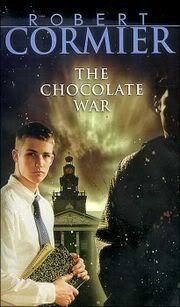
It seems some parents complained about The Chocolate War an assigned book that they thought to be offensive.

What is ironic is that one of the book and film’s main theme is “conformity” – where the majority imposes orthodoxy in thoughts and belief. That is what censorship does. It imposes an orthodoxy in thoughts and beliefs by suppressing any that are contrary.

JOHNSTOWN, Ohio – Some parents are urging officials in the Northridge School district to place a ban on a controversial book that is assigned to high school students.

Michelle Doran and a few other parents are upset because students at Northridge High School are assigned to read The Chocolate War – a young adult novel written by Robert Cormier that was published in 1974.

Doran, whose son was required to read the book last year as a freshman at Northridge, took issue with some of the book’s passages, 10TV’s Tanisha Mallett reported.

“Her breast brushing against his arm set him on fire,” Doran recites. “If these books were a movie, they would be Rated R, why should we be encouraging them to read these books?”

Novel Draws Criticism From Parents

The Chocolate War was made into a movie in 1988 and it starred John Glover, Ilan Mitchell-Smith, and Wallace Langham and it was rated R. It is one of my favorite movies. The main plot is that a kid named Jerry Renault refuses to sell chocolate that raises money for his prep school which starts a war with the kids who controlled the school.

Ms. Doran continues:

“I understand they want to have freedom as to what they want to teach, but who are they teaching?” she said. “They’re teaching our children.”

I agree that parents should not only know what is being taught to their children but should have some control, but people like Doran not only want to “protect” their children they also want to prevent me from making the same choice for my children that she demands for herself.

If she wants to be able to opt-out her children from reading the book, I would support that, even though she is doing her children a disservice in the guise of protection, but she shouldn’t be allowed to have a say in what any other children can read.

The other point that bothered me about this issue is that the book is on a reading list for high school kids. That age range is something like 16 to 18. We call that young adult. Too young for 100% freedom of thought and action but too old to want them to think the world is just an episode of Teletubbies. It bothers me that some parents forget they were 16 once and also forget that words do nothing other than help children learn and relate about their world. It just seems warped that a parent thinks they can “protect” children from their natural reaction – in their bodies and minds – to becoming full and healthy adults.

Yet the American Library Association (ALA) ranks sex as the largest reason for challenges against books.

I had a job when I was 16, I could go see R rated movies when I was 17, and I was allowed to sign my own absence notes when I missed school when I was 18 – not to mention I could vote. I also knew all the euphemisms for a penis, that the clit was very important during sex, and a breast brushing against my arm would set me on fire. I was on fire pretty much 24 hours a day seven days a week during high school. A simple flip of a girls pony tail would hypnotize me for hours.

The ALA has, on it’s website, one of my favorite quotes against censorship:

“If all mankind minus one, were of one opinion, and only one person were of the contrary opinion, mankind would be no more justified in silencing that one person, than he, if he had the power, would be justified in silencing mankind. Were an opinion a personal possession of no value except to the owner; if to be obstructed in the enjoyment of it were simply a private injury, it would make some difference whether the injury was inflicted only on a few persons or on many. But the peculiar evil of silencing the expression of an opinion is, that it is robbing the human race; posterity as well as the existing generation; those who dissent from the opinion, still more than those who hold it. If the opinion is right, they are deprived of the opportunity of exchanging error for truth: if wrong, they lose, what is almost as great a benefit, the clearer perception and livelier impression of truth, produced by its collision with error.” — On Liberty, John Stuart Mill

There is a video from my local station about the book challenge here.

FEMA wants to require IDs for volunteers

Picture this scene.

A major bridge collapses with dozens of cars and their occupants trapped. A school bus, with about 50 children and adults is sitting next to a truck that has burst into flames. Several people who see the disaster run to the scene but have to wait for trained the rescue and fire personnel to arrive to save the kids.

Or how about this scene.

Flash flooding hits a city. As the water rises, trapping and endangering dozens of people, Joe Smoe who lives down the street and has a boat uses it to save himself but is not allowed to help the others. They have to wait until trained rescue workers can arrive.

Not possible? Could be if the federal government gets it way.

In an effort to provide better control and coordination, the federal government is launching an ambitious ID program for rescue workers to keep everyday people from swarming to a disaster scene.

Proponents say the system will get professionals on scene quicker and keep untrained volunteers from making tough work more difficult.

“Everybody wants to come to the fight, so to speak, and no one wants to step back and say ‘No, I can’t do this.’ The final coup de grace was the World Trade Center. Hundreds came that were never asked,” deputy assistant U.S. Fire Administrator Charlie Dickinson said. “Good intentions, good hearts, and it was extremely difficult for the fire department and the other departments to deal with them.”

The Federal Emergency Management Agency came up with the idea after the World Trade Center attack and Hurricane Katrina in 2005, when countless Americans rushed to help – unasked, undirected, and sometimes unwanted.

Feds to Restrict Volunteers at Disasters

Yes. FEMA wants to restrict volunteer help during disasters. Kind of ironic isn’t it. One the volunteers thinks so too.

Similar frustrations arose after Katrina, when people were shocked that the government struggled to take basic supplies such as water to the worst areas.

“They’re more worried about keeping volunteers out than doing an analysis of what really went wrong,” said Ground zero volunteer Rhonda Shearer. “Independent citizens need to be involved, where we have no ax to grind or cross to bear. But we will tell the truth, and we will tell what we see and bear witness to the incompetence.”

In many times of distress, it is the untrained volunteer that is first to arrive and first to act and who saves people or makes their lives a bit better while the government lumbers into action. Any idea about controlling volunteers smells like a cover up and lack of accountability.