Become a banker through Kiva

On the talk show Countdown with Keith Olbermann, there was an interview with President Bill Clinton about his world charity efforts through the Clinton Global Initiative. One of the programs Clinton wrote about in his recent book “Giving” was about the website Kiva.org

We let you loan to the working poor

Kiva lets you connect with and loan money to unique small businesses in the developing world. By choosing a business on Kiva.org, you can “sponsor a business” and help the world’s working poor make great strides towards economic independence. Throughout the course of the loan (usually 6-12 months), you can receive email journal updates from the business you’ve sponsored. As loans are repaid, you get your loan money back.

What We Do

It is called microfinance where people are looking for financing for their ideas and businesses but the amount needed isn’t the amount a typical bank would loan, if they would qualify, but if they could get it, it would make a huge difference in their lives.

It is a loan so you can get your money back and can loan it out again to another business if you want.

To me this is a classic application of the Humanist philosophy. People are responsible for their own actions and you show compassion for and interest in the human condition.

I plan on contributing and I hope you do too.

For more info:

Kiva.org

Some thoughts on the Jena 6 protests

The Jena 6 are a group of black teens who were arrested and charged in the beating of a white student at the local high school in Jena Louisiana. It was the climax of several incidents of a racial nature that started with nooses hanging from a shade tree the day after two black students had sat under it.

The white students who were responsible for what was described as a “prank” were recommended to be expelled (as they should have) but the school board overturned the decision. The students were given 3 day in-school suspensions.

Then other incidents happened:

During the Thanksgiving holiday, someone set fire to the school, reducing the main academic wing to rubble (no one has been arrested, and though a link between what was ruled an arson and the racial discord hasn’t been proved, many suspect there is one). The following day, Bailey was punched and beaten with beer bottles when he tried to enter a mostly white party in town. The white kid who threw the first punch was later charged with simple battery and given probation. The next day, Bailey ran into a young white man who was at the party. Bailey and parents of the Jena Six say that when the man pulled a gun on him, he tangled with him and stripped it away. He was later charged with theft of a firearm.

The tension culminated back at school the following Monday. Justin Barker, a white student who says he is friends with the kids who hung the nooses, reportedly taunted Bailey at lunch (Barker denies this). A while later, an African-American student allegedly punched Barker from behind, knocking him unconscious. Then, say white witnesses, a group of black students that included Bailey continued to assault Barker, kicking and stomping on him. (Jena High student Justin Purvis and other black witnesses dispute this.) Barker, who was treated for injuries at a nearby hospital, was released later that day, apparently in strong enough shape to attend a class-ring ceremony that evening.

A Town In Turmoil

I agree with many who are protesting the unequal justice being applied (the whites involved getting less punishment than the blacks). I just don’t agree with one of the bumper sticker slogans I saw that said “Free the Jena 6”.

The teens have been accused of a crime so just because they may not get a fair shake doesn’t mean we should look the other way in the name of good race relations. The person they are accused of beating was hurt so the event did happen.

Protest the justice system and fight to get them all a fair hearing and see what happens.

Protecting “our” children from books whether you like it or not

I was watching the local news on Wednesday when I came across a story about a book controversy in a local school district.

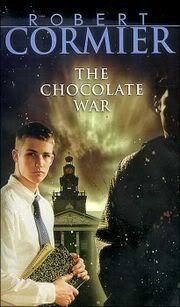
It seems some parents complained about The Chocolate War an assigned book that they thought to be offensive.

What is ironic is that one of the book and film’s main theme is “conformity” – where the majority imposes orthodoxy in thoughts and belief. That is what censorship does. It imposes an orthodoxy in thoughts and beliefs by suppressing any that are contrary.

JOHNSTOWN, Ohio – Some parents are urging officials in the Northridge School district to place a ban on a controversial book that is assigned to high school students.

Michelle Doran and a few other parents are upset because students at Northridge High School are assigned to read The Chocolate War – a young adult novel written by Robert Cormier that was published in 1974.

Doran, whose son was required to read the book last year as a freshman at Northridge, took issue with some of the book’s passages, 10TV’s Tanisha Mallett reported.

“Her breast brushing against his arm set him on fire,” Doran recites. “If these books were a movie, they would be Rated R, why should we be encouraging them to read these books?”

Novel Draws Criticism From Parents

The Chocolate War was made into a movie in 1988 and it starred John Glover, Ilan Mitchell-Smith, and Wallace Langham and it was rated R. It is one of my favorite movies. The main plot is that a kid named Jerry Renault refuses to sell chocolate that raises money for his prep school which starts a war with the kids who controlled the school.

Ms. Doran continues:

“I understand they want to have freedom as to what they want to teach, but who are they teaching?” she said. “They’re teaching our children.”

I agree that parents should not only know what is being taught to their children but should have some control, but people like Doran not only want to “protect” their children they also want to prevent me from making the same choice for my children that she demands for herself.

If she wants to be able to opt-out her children from reading the book, I would support that, even though she is doing her children a disservice in the guise of protection, but she shouldn’t be allowed to have a say in what any other children can read.

The other point that bothered me about this issue is that the book is on a reading list for high school kids. That age range is something like 16 to 18. We call that young adult. Too young for 100% freedom of thought and action but too old to want them to think the world is just an episode of Teletubbies. It bothers me that some parents forget they were 16 once and also forget that words do nothing other than help children learn and relate about their world. It just seems warped that a parent thinks they can “protect” children from their natural reaction – in their bodies and minds – to becoming full and healthy adults.

Yet the American Library Association (ALA) ranks sex as the largest reason for challenges against books.

I had a job when I was 16, I could go see R rated movies when I was 17, and I was allowed to sign my own absence notes when I missed school when I was 18 – not to mention I could vote. I also knew all the euphemisms for a penis, that the clit was very important during sex, and a breast brushing against my arm would set me on fire. I was on fire pretty much 24 hours a day seven days a week during high school. A simple flip of a girls pony tail would hypnotize me for hours.

The ALA has, on it’s website, one of my favorite quotes against censorship:

“If all mankind minus one, were of one opinion, and only one person were of the contrary opinion, mankind would be no more justified in silencing that one person, than he, if he had the power, would be justified in silencing mankind. Were an opinion a personal possession of no value except to the owner; if to be obstructed in the enjoyment of it were simply a private injury, it would make some difference whether the injury was inflicted only on a few persons or on many. But the peculiar evil of silencing the expression of an opinion is, that it is robbing the human race; posterity as well as the existing generation; those who dissent from the opinion, still more than those who hold it. If the opinion is right, they are deprived of the opportunity of exchanging error for truth: if wrong, they lose, what is almost as great a benefit, the clearer perception and livelier impression of truth, produced by its collision with error.” — On Liberty, John Stuart Mill

There is a video from my local station about the book challenge here.

Diane Lane Tribute Page

Or “What I did during my Labor Day off work”

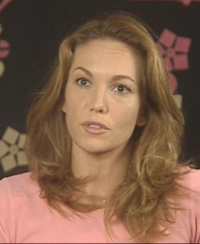
diane005 (68K)To prove once again, how pale and friendless I am, I finally finished my long awaited tribute page to actor Diane Lane.

I have enjoyed her film career since her debut in 1979 in “A Little Romance” and I have never seen her give a bad performance.

Not knowing anything about her private personal life, I think we would get along great as friends.

So enjoy:

My Tribute to Diane Lane

Bush wants to compare Iraq to Vietnam

On Wednesday August 23 President George Bush, speaking to the VFW convention in Kansas City, said this:

Finally, there’s Vietnam. This is a complex and painful subject for many Americans. The tragedy of Vietnam is too large to be contained in one speech. So I’m going to limit myself to one argument that has particular significance today. Then as now, people argued the real problem was America’s presence and that if we would just withdraw, the killing would end…..

There was another price to our withdrawal from Vietnam, and we can hear it in the words of the enemy we face in today’s struggle — those who came to our soil and killed thousands of citizens on September the 11th, 2001. In an interview with a Pakistani newspaper after the 9/11 attacks, Osama bin Laden declared that “the American people had risen against their government’s war in Vietnam. And they must do the same today.”

President Bush Attends Veterans of Foreign Wars National Convention, Discusses War on Terror

Bush, and his neo-con buddies, are trying to introduce another “reason” we need to stay in Iraq. He thinks that if we leave then Iraq will descend into chaos and it will encourage our “enemies”.

Iraq is a lot like Vietnam but not like Bush wants us to think.

Our work in Iraq is the result of arrogance and a lack of acknowledgement of a failed policy. President Johnson and Defense Secretary Robert McNamera knew their Vietnam policy was wrong and we wouldn’t “win” but were so worried about their pride that they allowed thousands of more US deaths. The Bush administration will not admit their policy has failed and their pride makes them come up with stories like Bush’s speech to the VFW.

In Vietnam, President Johnson believed that if more troops were sent in then we would win. Even after having 500,000 troops on the ground and winning the few conventional battles that North Vietnam tried, we still couldn’t win the non-conventional war that was the main focus of the Viet Cong. Just as in Iraq, conventional troops can’t win a non-conventional war no matter how many troops you have.

The Johnson administration supported, propped up, and manipulated a corrupt South Vietnam government. Just like in Vietnam, in Iraq, the civilian government has no power without the US troops keeping them protected. Instead of trying to form a government that would give the people the democracy we say we want it seems we want a government for our own purposes. It didn’t work in Vietnam and it won’t work in Iraq.

The Mahablog stated:

Vietnam and Iraq are similar in that they present the same paradox — that victory could equal defeat. By that I mean using enough military force to utterly crush the warring factions would amount to throwing away our political objectives. The operative phrase, I believe, is “Pyrrhic victory.” To those who continue to complain that we could have “won” in Vietnam, and could still “win” in Iraq, I say, of course. But this isn’t a game. Get over childish ideas about “victory” and “defeat” and see the bigger picture, for once.

Instead of talking about winning and losing, we should clearly understand what our objectives are in Iraq and then consider how those objectives might be achieved. Military “victory” and “defeat” are abstractions that don’t apply to the reality.

Of Soldiers, Spooks, and Do-Gooders

Before we got into Iraq, Bush and his cronies strongly claimed that it would not be another Vietnam. Now Bush wants us to believe it will be and it will be, just not the way he thinks.